Buy btest.eu ?
We are moving the project
btest.eu .
Are you interested in purchasing the domain
btest.eu ?
domain@kv-gmbh.de · 0541-91531010
Buy btest.eu ?
What is the difference between strictly monotonic increasing and monotonic increasing?
Strictly monotonic increasing means that the function is always increasing and never stays the same, while monotonic increasing means that the function is always increasing or staying the same. In other words, a strictly monotonic increasing function will always have a positive slope, while a monotonic increasing function can have a zero slope at certain points. Therefore, strictly monotonic increasing functions are a subset of monotonic increasing functions. **
What is monotonic behavior?
Monotonic behavior refers to a consistent and unidirectional trend in a set of data or a mathematical function. In a monotonic increasing function, the values consistently increase as the input variable increases. Conversely, in a monotonic decreasing function, the values consistently decrease as the input variable increases. Monotonic behavior is important in various fields such as economics, engineering, and mathematics, as it helps in understanding and predicting the behavior of systems and processes. **

Similar search terms for Non-monotonic
Top-Angebote
Products related to Non-monotonic:
-
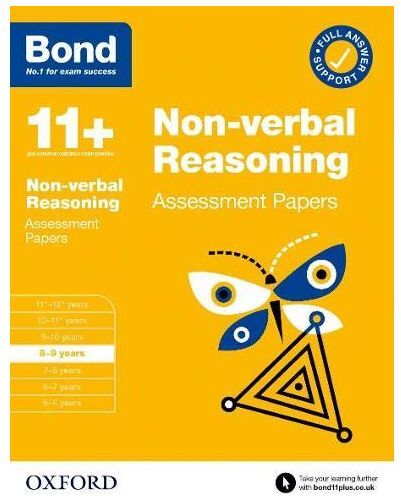
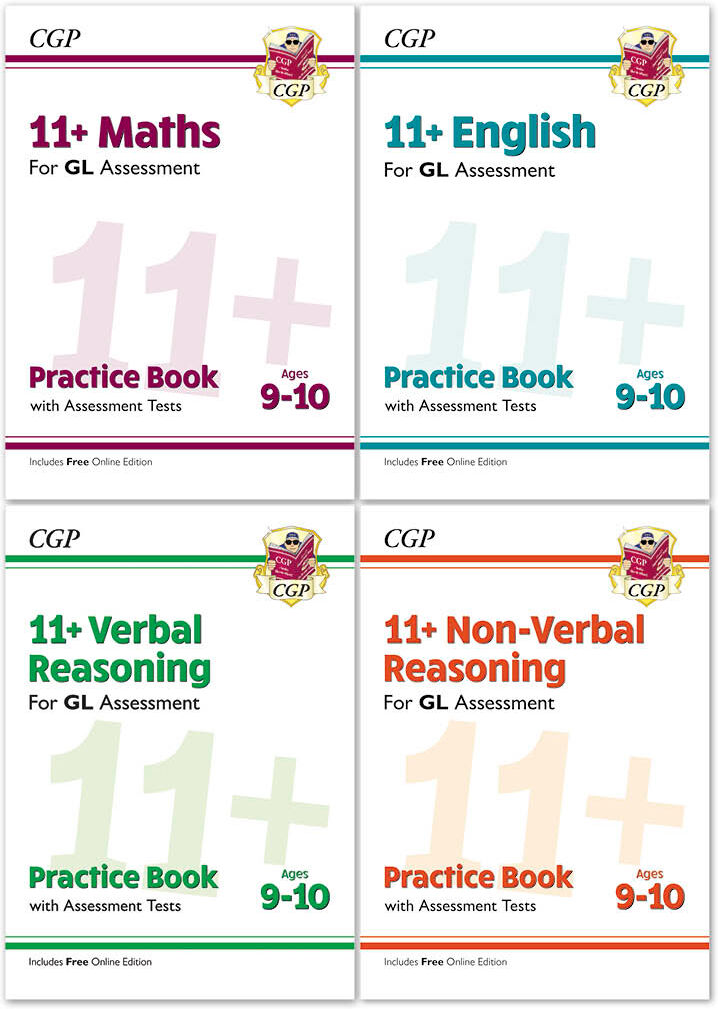
CGP Books CGP 11+ GL Practice Book & Assessment Tests Bundle – Ages 9-10 (Maths, English, Verbal Reasoning, Non-Verbal Reasoning)You can't beat a CGP book for 11+ prep! This fantastic bundle contains four of CGP's essential 11+ Practice Books for ages 9-10. Each book is full of GL-style questions, with realistic Assessment Tests to help kids work on their speed and accuracy. 11+ GL Verbal Reasoning Practice Book & Assessment Tests — Ages 9-10 (9781789081664) 11+ GL Non-Verbal Reasoning Practice Book & Assessment Tests — Ages 9-10 (9781789081626) 11+ GL Maths Practice Book & Assessment Tests — Ages 9-10 (9781789081589) 11+ GL English Practice Book & Assessment Tests — Ages 9-10 (9781789081541) 11+ GL Verbal Reasoning Practice Book & Assessment Tests — Ages 9-10 Ideal for building up the Verbal Reasoning skills children will need for the 11+ (and other selective entrance exams), this book is packed with targeted practice questions for ages 9-10. The first section of the book focuses on one topic at a time to help children gain understanding and confidence. This is followed by seven Assessment Tests to improve their speed and accuracy across a wide range of questions. And if they get stuck or go wrong, the detailed answers make it easy to understand the reasoning behind the questions. 11+ GL Non-Verbal Reasoning Practice Book & Assessment Tests — Ages 9-10 Ideal for building the key skills children need for 11+ Non-Verbal Reasoning (and other selective entrance exams), this book contains a wide range of practice questions set at a level that’s perfect for ages 9-10. The first section of the book focuses on one topic at a time to help children gain understanding and confidence. The second section has Assessment Tests to improve pupils' speed and accuracy across a wide range of questions. Detailed answers are included at the back of the book. 11+ GL Maths Practice Book & Assessment Tests — Ages 9-10 This book is brimming with Maths questions (with fully explained answers) for ages 9-10 - it’s a fantastic resource for helping children work towards the 11+. The first section of the book focuses on one topic at a time to help children gain understanding and confidence The second section has realistic Assessment Tests to improve their speed and accuracy across a wide range of questions. 11+ GL English Practice Book & Assessment Tests — Ages 9-10 This Practice Book is an excellent resource for helping children work towards the 11+ English test and other selective entrance exams. It’s full of questions set at a level that’s typically suitable for ages 9-10. The first section of the book focuses on one topic at a time to help children gain understanding and confidence. The second section has six Assessment Tests to improve their speed and accuracy across a wide range of questions. Fully worked answers are included at the back of the book.27,99 £*Shipping: 2,99 £Secure redirect to the provider
-
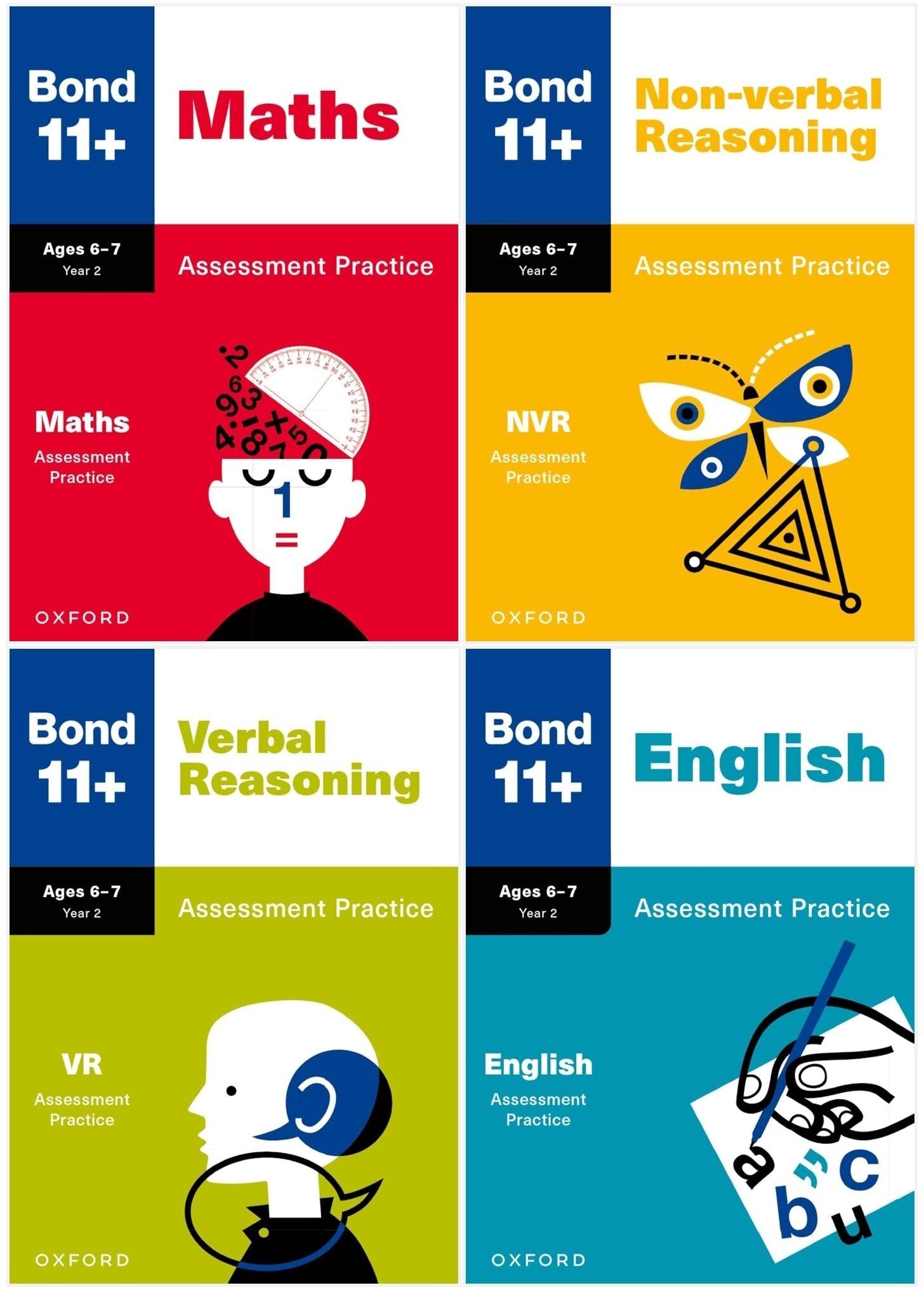
OXFORD UNIVERSITY PRESS Bond 11+ Maths English Verbal Reasoning Non-verbal Reasoning Assessment Papers 4 Books Set - Age 6-7Bond 11+ Maths English Verbal Non-Verbal Reasoning Assessment Practice 6-7 years 4 Books Set (Bond Assessment Papers) Developed and written by experienced tutors, Bond 11+ Assessment Practice Books offer exam-style practice questions, perfect for preparing for the GL 11+ exam and other selective school tests, with full answer explanations in a removable booklet. Bond 11+ English Assessment Practice Age 6-7: Covers all of the core 11+ English exam topics including comprehension, spelling, sentences, punctuation, and grammar Bond 11+ Maths Assessment Practice Age 6-7: Covers a wide variety of maths topics including place value, multiplication and division, fractions, shapes, measurement, and diagrams Bond 11+ Non-verbal Reasoning Assessment Practice Age 6-7: Covers a wide variety of non-verbal reasoning topics including shapes, angles and rotation, similarities, sequences, reflections, and grids Bond 11+ Verbal Reasoning Assessment Practice Age 6-7: Covers a wide variety of verbal reasoning topics including word meanings, word connections, missing letters, patterns and sequences, anagrams, and codes16,99 £*Shipping: 2,99 £Secure redirect to the provider
-
Monoray Girl Unmasked by Emily Katy - Sunday Times Bestselling Paperback Memoir - Autism Diagnosis & Self-Discovery - Non FictionGirl Unmasked is Emily Katy's memoir about growing up as an undiagnosed autistic girl and the moment everything finally made sense. Written with warmth, humor, and honesty, it's a candid account of masking, misunderstanding, and eventual self-acceptance. This paperback is ideal for anyone curious about neurodivergence, mental health, or the reality behind a late autism diagnosis. To the outside world, Emily Katy appeared to be a normal teenage girl, part of a family and living an ordinary life. However, she was quietly battling anxiety, sensory overwhelm, and a sense that she didn't fit the expected mold. The book traces those years in detail, exploring the exhausting effort of 'masking' to appear fine, the friendships and school experiences that felt harder than they should, and the moment everything finally made sense.4,99 £*Shipping: 2,99 £Secure redirect to the provider
-
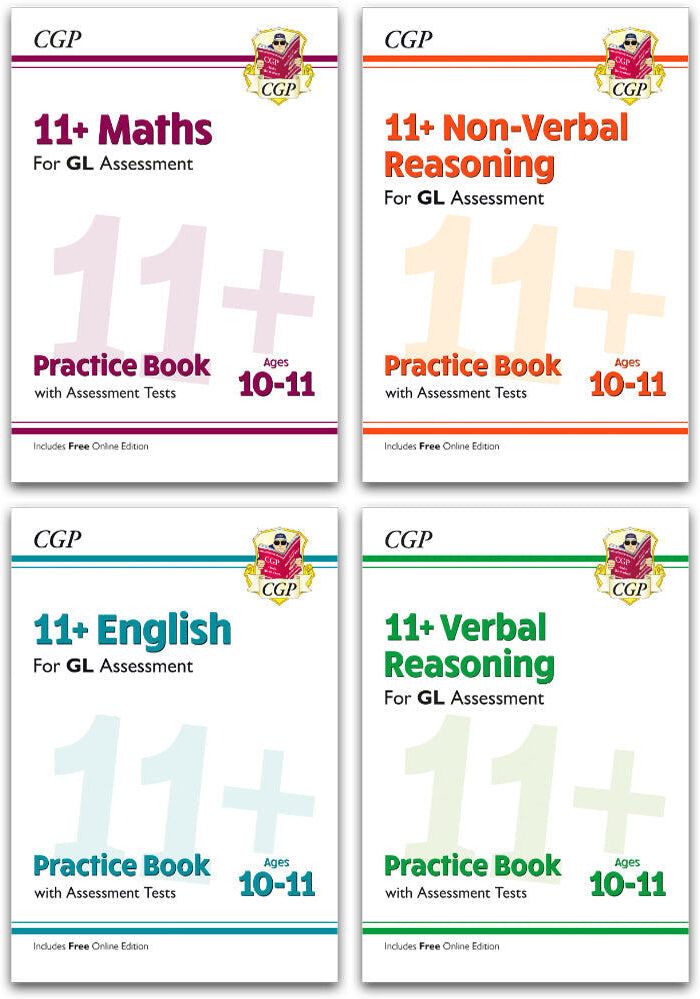
CGP Books 11+ GL Ages 10-11 Practice Book & Assessment Tests 4 Books Set: English, Maths, Verbal and Non-Verbal ReasoningThis superb 11+ bundle is an excellent way to prepare children aged 10-11 for the GL 11+ tests. It contains CGP's four Practice Books with Assessment Tests — each book covers English (9781789081558), Maths (9781789081596), Verbal Reasoning (9781789081671) and Non-Verbal Reasoning (9781789081633) separately. The Practice Books include practice questions for every topic and several realistic Assessment Tests. Answers can be found in the back of the books and free online editions are also included. This bundle is ideal for the 11+ tests set by GL Assessment and other test providers, and provides excellent practice for the Kent Test. A separate bundle for the CEM tests is also available.28,99 £*Shipping: 2,99 £Secure redirect to the provider

-
What is the difference between strictly monotonic decreasing/increasing and monotonic increasing/decreasing?
Strictly monotonic decreasing/increasing means that the function is either always decreasing or always increasing, without any flat regions or plateaus. Monotonic decreasing/increasing, on the other hand, allows for flat regions where the function remains constant. In other words, strictly monotonic functions do not have any horizontal sections, while monotonic functions may have horizontal sections. **
-
What is the difference between strictly monotonic increasing/decreasing and monotonic increasing/decreasing?
Strictly monotonic increasing/decreasing means that the function is either always increasing or always decreasing, without any flat regions or plateaus. Monotonic increasing/decreasing, on the other hand, allows for the possibility of flat regions or plateaus where the function remains constant. In other words, strictly monotonic functions do not have any horizontal sections, while monotonic functions may have some. **
-
What is strictly monotonic now?
A function is strictly monotonic if it is either strictly increasing or strictly decreasing. This means that for any two points in the function's domain, the function values at those points are either strictly increasing or strictly decreasing. In other words, the function does not have any plateaus or flat regions where the function values remain constant. **
-
Is every convergent sequence monotonic?
No, not every convergent sequence is monotonic. A convergent sequence is one that approaches a specific limit as the number of terms in the sequence increases. A monotonic sequence, on the other hand, is one that is either always increasing or always decreasing. While some convergent sequences may be monotonic, there are also convergent sequences that oscillate or have a mix of increasing and decreasing terms as they approach their limit. Therefore, not every convergent sequence is monotonic. **


How do you indicate that a function is strictly increasing or non-monotonic in an interval i?
To indicate that a function is strictly increasing in an interval i, you would show that for any two points a and b in the interval i, where a < b, the function value at a is less than the function value at b, i.e., f(a) < f(b). This would demonstrate that the function is strictly increasing in the interval i. To indicate that a function is non-monotonic in an interval i, you would need to show that there exist points a and b in the interval i, where a < b, such that the function value at a is less than the function value at b, and also points c and d in the interval i, where c < d, such that the function value at c is greater than the function value at d, i.e., f(a) < f(b) and f(c) > f(d). This would demonstrate that the function is non-monotonic in the interval i. **
How can one recognize monotonic behavior?
Monotonic behavior can be recognized by observing a consistent trend in the data where it either consistently increases or decreases without any significant fluctuations or reversals. One can also look for a clear pattern in the graph or data points that shows a steady and consistent direction. Additionally, calculating the slope of the data points can help determine if there is a consistent increase or decrease over time. **
Top-Angebote
Products related to Non-monotonic:
-
StayWell Professional Skin Analyzer Rechargeable UV Testing Analysis Magnifier With Dual Probes & Wi Fi App Control Professional Skin Analyzer Rechargeable UV Testing Analysis Magnifier With Dual Probes & Wi Fi App ControlExperience nextlevel skincare diagnostics with our Professional Skin Analyzer Rechargeable UV Testing Analysis Magnifier. Designed for beauty professionals and techsavvy enthusiasts alike, this smart device uses optical amplification to reveal...155,97 $*Shipping: 0,00 $Secure redirect to the provider
-
CGP Books CGP 11+ GL Practice Book & Assessment Tests Bundle – Ages 9-10 (Maths, English, Verbal Reasoning, Non-Verbal Reasoning)You can't beat a CGP book for 11+ prep! This fantastic bundle contains four of CGP's essential 11+ Practice Books for ages 9-10. Each book is full of GL-style questions, with realistic Assessment Tests to help kids work on their speed and accuracy. 11+ GL Verbal Reasoning Practice Book & Assessment Tests — Ages 9-10 (9781789081664) 11+ GL Non-Verbal Reasoning Practice Book & Assessment Tests — Ages 9-10 (9781789081626) 11+ GL Maths Practice Book & Assessment Tests — Ages 9-10 (9781789081589) 11+ GL English Practice Book & Assessment Tests — Ages 9-10 (9781789081541) 11+ GL Verbal Reasoning Practice Book & Assessment Tests — Ages 9-10 Ideal for building up the Verbal Reasoning skills children will need for the 11+ (and other selective entrance exams), this book is packed with targeted practice questions for ages 9-10. The first section of the book focuses on one topic at a time to help children gain understanding and confidence. This is followed by seven Assessment Tests to improve their speed and accuracy across a wide range of questions. And if they get stuck or go wrong, the detailed answers make it easy to understand the reasoning behind the questions. 11+ GL Non-Verbal Reasoning Practice Book & Assessment Tests — Ages 9-10 Ideal for building the key skills children need for 11+ Non-Verbal Reasoning (and other selective entrance exams), this book contains a wide range of practice questions set at a level that’s perfect for ages 9-10. The first section of the book focuses on one topic at a time to help children gain understanding and confidence. The second section has Assessment Tests to improve pupils' speed and accuracy across a wide range of questions. Detailed answers are included at the back of the book. 11+ GL Maths Practice Book & Assessment Tests — Ages 9-10 This book is brimming with Maths questions (with fully explained answers) for ages 9-10 - it’s a fantastic resource for helping children work towards the 11+. The first section of the book focuses on one topic at a time to help children gain understanding and confidence The second section has realistic Assessment Tests to improve their speed and accuracy across a wide range of questions. 11+ GL English Practice Book & Assessment Tests — Ages 9-10 This Practice Book is an excellent resource for helping children work towards the 11+ English test and other selective entrance exams. It’s full of questions set at a level that’s typically suitable for ages 9-10. The first section of the book focuses on one topic at a time to help children gain understanding and confidence. The second section has six Assessment Tests to improve their speed and accuracy across a wide range of questions. Fully worked answers are included at the back of the book.27,99 £*Shipping: 2,99 £Secure redirect to the provider
-
OXFORD UNIVERSITY PRESS Bond 11+ Maths English Verbal Reasoning Non-verbal Reasoning Assessment Papers 4 Books Set - Age 6-7Bond 11+ Maths English Verbal Non-Verbal Reasoning Assessment Practice 6-7 years 4 Books Set (Bond Assessment Papers) Developed and written by experienced tutors, Bond 11+ Assessment Practice Books offer exam-style practice questions, perfect for preparing for the GL 11+ exam and other selective school tests, with full answer explanations in a removable booklet. Bond 11+ English Assessment Practice Age 6-7: Covers all of the core 11+ English exam topics including comprehension, spelling, sentences, punctuation, and grammar Bond 11+ Maths Assessment Practice Age 6-7: Covers a wide variety of maths topics including place value, multiplication and division, fractions, shapes, measurement, and diagrams Bond 11+ Non-verbal Reasoning Assessment Practice Age 6-7: Covers a wide variety of non-verbal reasoning topics including shapes, angles and rotation, similarities, sequences, reflections, and grids Bond 11+ Verbal Reasoning Assessment Practice Age 6-7: Covers a wide variety of verbal reasoning topics including word meanings, word connections, missing letters, patterns and sequences, anagrams, and codes16,99 £*Shipping: 2,99 £Secure redirect to the provider
-
What is the difference between strictly monotonic increasing and monotonic increasing?
Strictly monotonic increasing means that the function is always increasing and never stays the same, while monotonic increasing means that the function is always increasing or staying the same. In other words, a strictly monotonic increasing function will always have a positive slope, while a monotonic increasing function can have a zero slope at certain points. Therefore, strictly monotonic increasing functions are a subset of monotonic increasing functions. **
-
What is monotonic behavior?
Monotonic behavior refers to a consistent and unidirectional trend in a set of data or a mathematical function. In a monotonic increasing function, the values consistently increase as the input variable increases. Conversely, in a monotonic decreasing function, the values consistently decrease as the input variable increases. Monotonic behavior is important in various fields such as economics, engineering, and mathematics, as it helps in understanding and predicting the behavior of systems and processes. **
-
What is the difference between strictly monotonic decreasing/increasing and monotonic increasing/decreasing?
Strictly monotonic decreasing/increasing means that the function is either always decreasing or always increasing, without any flat regions or plateaus. Monotonic decreasing/increasing, on the other hand, allows for flat regions where the function remains constant. In other words, strictly monotonic functions do not have any horizontal sections, while monotonic functions may have horizontal sections. **
-
What is the difference between strictly monotonic increasing/decreasing and monotonic increasing/decreasing?
Strictly monotonic increasing/decreasing means that the function is either always increasing or always decreasing, without any flat regions or plateaus. Monotonic increasing/decreasing, on the other hand, allows for the possibility of flat regions or plateaus where the function remains constant. In other words, strictly monotonic functions do not have any horizontal sections, while monotonic functions may have some. **
Similar search terms for Non-monotonic
-
Monoray Girl Unmasked by Emily Katy - Sunday Times Bestselling Paperback Memoir - Autism Diagnosis & Self-Discovery - Non FictionGirl Unmasked is Emily Katy's memoir about growing up as an undiagnosed autistic girl and the moment everything finally made sense. Written with warmth, humor, and honesty, it's a candid account of masking, misunderstanding, and eventual self-acceptance. This paperback is ideal for anyone curious about neurodivergence, mental health, or the reality behind a late autism diagnosis. To the outside world, Emily Katy appeared to be a normal teenage girl, part of a family and living an ordinary life. However, she was quietly battling anxiety, sensory overwhelm, and a sense that she didn't fit the expected mold. The book traces those years in detail, exploring the exhausting effort of 'masking' to appear fine, the friendships and school experiences that felt harder than they should, and the moment everything finally made sense.4,99 £*Shipping: 2,99 £Secure redirect to the provider
-
CGP Books 11+ GL Ages 10-11 Practice Book & Assessment Tests 4 Books Set: English, Maths, Verbal and Non-Verbal ReasoningThis superb 11+ bundle is an excellent way to prepare children aged 10-11 for the GL 11+ tests. It contains CGP's four Practice Books with Assessment Tests — each book covers English (9781789081558), Maths (9781789081596), Verbal Reasoning (9781789081671) and Non-Verbal Reasoning (9781789081633) separately. The Practice Books include practice questions for every topic and several realistic Assessment Tests. Answers can be found in the back of the books and free online editions are also included. This bundle is ideal for the 11+ tests set by GL Assessment and other test providers, and provides excellent practice for the Kent Test. A separate bundle for the CEM tests is also available.28,99 £*Shipping: 2,99 £Secure redirect to the provider
-
CGP Books 11+ GL Ages 8-9 Practice Book; Assessment Tests 4 Books Set: English, Maths, Verbal and Non-Verbal ReasoningThis 11+ bundle is an excellent way to prepare children aged 8-9 for the GL 11+ tests. It contains our four Practice Books with Assessment Tests — each book covers English (9781789081534), Maths (9781789081572), Verbal Reasoning (9781789081701) and Non-Verbal Reasoning (9781789081503) separately. The Practice Books include practice questions for every topic and several realistic Assessment Tests. Answers can be found in the back of the books and free online editions are also included. This bundle is ideal for the 11+ tests set by GL Assessment and other test providers, and provides excellent practice for the Kent Test. A separate bundle for the CEM tests is also available.27,99 £*Shipping: 2,99 £Secure redirect to the provider
-
Officially Licensed Gas Safe Gas Safe® Gas Testing & Purging Report (Non-Domestic) - Pad of 50Ensure comprehensive and professional documentation of non-domestic gas testing and purging with the Gas Safe Gas Testing & Purging Report Pad - Pad of 50. This official Gas Safe record pad is designed specifically for non-domestic settings, featuring 50 record sets to document each testing and purging procedure accurately. Crafted in a landscape format for easy on-site use, this pad includes double covers with a writing guard, providing a sturdy surface for efficient record-keeping. Reinforced with triple stitching and binding tape, the spine remains intact even after forms are removed. Each form is individually numbered and perforated on the left-hand side for easy removal. This pad is an essential tool for gas engineers, promoting compliance, professionalism, and thorough documentation in non-domestic gas testing and purging.13,19 £*Shipping: 5,00 £Secure redirect to the provider
-
What is strictly monotonic now?
A function is strictly monotonic if it is either strictly increasing or strictly decreasing. This means that for any two points in the function's domain, the function values at those points are either strictly increasing or strictly decreasing. In other words, the function does not have any plateaus or flat regions where the function values remain constant. **
-
Is every convergent sequence monotonic?
No, not every convergent sequence is monotonic. A convergent sequence is one that approaches a specific limit as the number of terms in the sequence increases. A monotonic sequence, on the other hand, is one that is either always increasing or always decreasing. While some convergent sequences may be monotonic, there are also convergent sequences that oscillate or have a mix of increasing and decreasing terms as they approach their limit. Therefore, not every convergent sequence is monotonic. **
-
How do you indicate that a function is strictly increasing or non-monotonic in an interval i?
To indicate that a function is strictly increasing in an interval i, you would show that for any two points a and b in the interval i, where a < b, the function value at a is less than the function value at b, i.e., f(a) < f(b). This would demonstrate that the function is strictly increasing in the interval i. To indicate that a function is non-monotonic in an interval i, you would need to show that there exist points a and b in the interval i, where a < b, such that the function value at a is less than the function value at b, and also points c and d in the interval i, where c < d, such that the function value at c is greater than the function value at d, i.e., f(a) < f(b) and f(c) > f(d). This would demonstrate that the function is non-monotonic in the interval i. **
-
How can one recognize monotonic behavior?
Monotonic behavior can be recognized by observing a consistent trend in the data where it either consistently increases or decreases without any significant fluctuations or reversals. One can also look for a clear pattern in the graph or data points that shows a steady and consistent direction. Additionally, calculating the slope of the data points can help determine if there is a consistent increase or decrease over time. **
* All prices are inclusive of VAT and, if applicable, plus shipping costs. The offer information is based on the details provided by the respective shop and is updated through automated processes. Real-time updates do not occur, so deviations can occur in individual cases. ** Note: Parts of this content were created by AI.