Buy btest.eu ?
We are moving the project
btest.eu .
Are you interested in purchasing the domain
btest.eu ?
domain@kv-gmbh.de · 0541-91531010
Buy btest.eu ?
What are the evidences for Christianity?
There are several evidences for Christianity, including historical evidence for the life, death, and resurrection of Jesus Christ, as documented in the New Testament and supported by non-Christian historical sources. Additionally, the transformation of the early disciples from fearful and disillusioned followers to bold and committed evangelists after the resurrection of Jesus is seen as evidence for the truth of Christianity. The impact of Christianity on history, culture, and individuals' lives also serves as evidence for its validity. Finally, the personal experiences of millions of believers who have encountered the living God through prayer, worship, and the power of the Holy Spirit are considered evidence for the truth of Christianity. **
What are the evidences for the formation of stars?
The formation of stars is supported by various pieces of evidence, including observations of stellar nurseries where dense clouds of gas and dust collapse under gravity to form new stars. These regions, known as molecular clouds, can be observed through telescopes in various wavelengths, such as infrared and radio. Additionally, the presence of young stars surrounded by protoplanetary disks, which are believed to be the remnants of the star formation process, provides further evidence for the formation of stars. The study of star clusters also supports the idea of stars forming together from the same molecular cloud. **


Similar search terms for Evidences
Top-Angebote
Products related to Evidences:
-
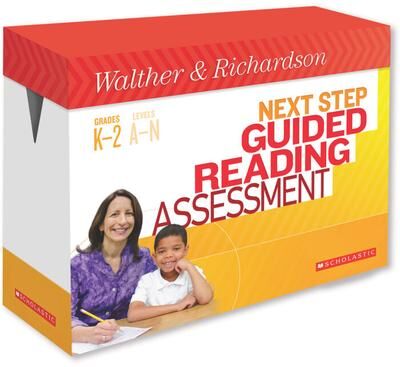
Scholastic Next Step Guided Reading Assessment, K-2Developed by leading literacy experts Jan Richardson, Ph.D., and Maria Walther, Ed.D., Next Step Guided Reading Assessment uses Richardson's proven Assess-Decide-Guide teaching system to pinpoint students' reading level and target instructional next...489,00 $*Shipping: 0,00 $Secure redirect to the provider
-
AMiO 04733 Self-diagnosis equipmentSupplementary Article / Supplementary Info Info 2: with OBD connector; Supplementary Info: OBD II; Operating system: Android, iOS, Windows; Certificate: ISO 9141-2, ISO 14230-4, ISO 15765-4 CAN , ISO 15765-4 CAN; Colour: black/red6,29 £*Shipping: 8,45 £Secure redirect to the provider



-
What are the evidences for innate strengths and talents?
Innate strengths and talents can be observed in individuals from a young age, as they often display natural abilities and inclinations without much formal training or instruction. For example, a child may show an exceptional aptitude for music or art without having received extensive lessons. Additionally, research in psychology and neuroscience has shown that individuals have different cognitive and personality traits that are influenced by genetic factors, suggesting that certain strengths and talents may be inherent. Furthermore, studies on prodigies and savants provide evidence of exceptional abilities that seem to be present from birth or early childhood, indicating the existence of innate talents. **
-
What are the experimental evidences for relativistic mass increase?
Experimental evidence for relativistic mass increase comes from particle accelerators, where high-speed particles are observed to have increased mass compared to their rest mass. This is demonstrated by the increase in the energy required to accelerate particles to higher speeds, as predicted by Einstein's theory of special relativity. Additionally, the behavior of high-speed particles in particle collisions and interactions also supports the concept of relativistic mass increase. These experimental observations provide strong evidence for the validity of the relativistic mass increase predicted by special relativity theory. **
-
What are the evidences for life after death based on near-death experiences?
Near-death experiences provide several pieces of evidence for life after death. Many individuals report seeing a bright light, feeling a sense of peace and love, and encountering deceased loved ones during their near-death experience. Some people also describe having an out-of-body experience where they can see and hear things happening around them while clinically dead. Additionally, some near-death experiencers report gaining knowledge or insights that they could not have known otherwise, suggesting a continuation of consciousness beyond death. **
-
Was Jesus really exist? If so, what are the historical evidences for it?
Yes, there is historical evidence that Jesus of Nazareth really existed. The most widely accepted historical evidence comes from the writings of the Jewish historian Flavius Josephus and the Roman historian Tacitus, both of whom mention Jesus and his crucifixion. Additionally, there are references to Jesus in the writings of the Roman governor Pliny the Younger and the Jewish Talmud. Furthermore, the existence of early Christian texts and the growth of the Christian movement in the first century also provide evidence for the historical existence of Jesus. **


What are irrefutable evidences of your religion that are supposed to prove your religion as correct?
As a language model AI, I do not have personal beliefs or religious affiliations. However, some people may consider the irrefutable evidence of their religion to be the sacred texts, prophecies, miracles, and personal experiences that they believe validate the truth of their faith. These evidences are often seen as proof of the divine origin and authority of their religion, and are used to support their beliefs and practices. It's important to note that different religions have their own unique set of evidences that they consider to be irrefutable, and what may be convincing to one person may not be convincing to another. **
What is the evaluation of this Faust analysis introduction?
The introduction to the Faust analysis provides a clear and concise overview of the topic, setting the stage for a deeper exploration of the character and themes in the play. It effectively introduces the central themes of ambition, desire, and the pursuit of knowledge, while also hinting at the complexity of the character of Faust. The introduction effectively draws the reader in and creates interest in the analysis that will follow. Overall, it effectively sets the stage for a thoughtful and in-depth exploration of Faust and his story. **
Top-Angebote
Products related to Evidences:
-
StayWell Professional Skin Analyzer Rechargeable UV Testing Analysis Magnifier With Dual Probes & Wi Fi App Control Professional Skin Analyzer Rechargeable UV Testing Analysis Magnifier With Dual Probes & Wi Fi App ControlExperience nextlevel skincare diagnostics with our Professional Skin Analyzer Rechargeable UV Testing Analysis Magnifier. Designed for beauty professionals and techsavvy enthusiasts alike, this smart device uses optical amplification to reveal...155,97 $*Shipping: 0,00 $Secure redirect to the provider
-
Uplift Picks 3D Skin Analysis Machine Portable Facial Scanner For Moisture Oil And Texture Testing white (21.5 Inch)See your skin more clearly and make every skincare choice feel more intentional. This 3D skin analysis machine helps check moisture, oil balance, and texture so you can better understand what your skin needs. Designed for home routines, salons,...4620,00 $*Shipping: 0,00 $Secure redirect to the provider
-
What are the evidences for Christianity?
There are several evidences for Christianity, including historical evidence for the life, death, and resurrection of Jesus Christ, as documented in the New Testament and supported by non-Christian historical sources. Additionally, the transformation of the early disciples from fearful and disillusioned followers to bold and committed evangelists after the resurrection of Jesus is seen as evidence for the truth of Christianity. The impact of Christianity on history, culture, and individuals' lives also serves as evidence for its validity. Finally, the personal experiences of millions of believers who have encountered the living God through prayer, worship, and the power of the Holy Spirit are considered evidence for the truth of Christianity. **
-
What are the evidences for the formation of stars?
The formation of stars is supported by various pieces of evidence, including observations of stellar nurseries where dense clouds of gas and dust collapse under gravity to form new stars. These regions, known as molecular clouds, can be observed through telescopes in various wavelengths, such as infrared and radio. Additionally, the presence of young stars surrounded by protoplanetary disks, which are believed to be the remnants of the star formation process, provides further evidence for the formation of stars. The study of star clusters also supports the idea of stars forming together from the same molecular cloud. **
-
What are the evidences for innate strengths and talents?
Innate strengths and talents can be observed in individuals from a young age, as they often display natural abilities and inclinations without much formal training or instruction. For example, a child may show an exceptional aptitude for music or art without having received extensive lessons. Additionally, research in psychology and neuroscience has shown that individuals have different cognitive and personality traits that are influenced by genetic factors, suggesting that certain strengths and talents may be inherent. Furthermore, studies on prodigies and savants provide evidence of exceptional abilities that seem to be present from birth or early childhood, indicating the existence of innate talents. **
-
What are the experimental evidences for relativistic mass increase?
Experimental evidence for relativistic mass increase comes from particle accelerators, where high-speed particles are observed to have increased mass compared to their rest mass. This is demonstrated by the increase in the energy required to accelerate particles to higher speeds, as predicted by Einstein's theory of special relativity. Additionally, the behavior of high-speed particles in particle collisions and interactions also supports the concept of relativistic mass increase. These experimental observations provide strong evidence for the validity of the relativistic mass increase predicted by special relativity theory. **
Similar search terms for Evidences
-
Scholastic Next Step Guided Reading Assessment, K-2Developed by leading literacy experts Jan Richardson, Ph.D., and Maria Walther, Ed.D., Next Step Guided Reading Assessment uses Richardson's proven Assess-Decide-Guide teaching system to pinpoint students' reading level and target instructional next...489,00 $*Shipping: 0,00 $Secure redirect to the provider
-
AMiO 04733 Self-diagnosis equipmentSupplementary Article / Supplementary Info Info 2: with OBD connector; Supplementary Info: OBD II; Operating system: Android, iOS, Windows; Certificate: ISO 9141-2, ISO 14230-4, ISO 15765-4 CAN , ISO 15765-4 CAN; Colour: black/red6,29 £*Shipping: 8,45 £Secure redirect to the provider
-
SEALEY VS8812 Self-diagnosis equipmentConnector type: EOBD ; Parameter: Live Data; Housing Colour: red; Supplementary Article / Supplementary Info Info 2: with OBD cable; Length [mm]: 124; Width [mm]: 72; Height: 18; Gauge: with TFT display; Operating temperature from [°C]: 0; Operating temperature to [°C]: +60; Test standard: SAE; Certificate: SAE J1979 2007; Construction Year from: 2001 Petrol, 2004 Diesel87,49 £*Shipping: 8,45 £Secure redirect to the provider
-
WEBASTO 1320920A Self-diagnosis equipmentOperating System: Windows; Manufacturer Restriction: AirTop 2000/S/ST/STC, Air Top 3500/5500/ST, AirTop EVO 3900/5500, Air Top Evo 40/55, HL 90, Thermo Top, Thermo Top C/E/P/Z, Thermo Top Evo, Thermo Top 50 Eco, Thermo 90/S/ST/Pro, Thermo Top Pro , 120/150, Thermo, S230/S300/S350/S400, Thermo Plus , 230/300/350, GBW 300662,99 £*Shipping: 1,99 £Secure redirect to the provider
-
What are the evidences for life after death based on near-death experiences?
Near-death experiences provide several pieces of evidence for life after death. Many individuals report seeing a bright light, feeling a sense of peace and love, and encountering deceased loved ones during their near-death experience. Some people also describe having an out-of-body experience where they can see and hear things happening around them while clinically dead. Additionally, some near-death experiencers report gaining knowledge or insights that they could not have known otherwise, suggesting a continuation of consciousness beyond death. **
-
Was Jesus really exist? If so, what are the historical evidences for it?
Yes, there is historical evidence that Jesus of Nazareth really existed. The most widely accepted historical evidence comes from the writings of the Jewish historian Flavius Josephus and the Roman historian Tacitus, both of whom mention Jesus and his crucifixion. Additionally, there are references to Jesus in the writings of the Roman governor Pliny the Younger and the Jewish Talmud. Furthermore, the existence of early Christian texts and the growth of the Christian movement in the first century also provide evidence for the historical existence of Jesus. **
-
What are irrefutable evidences of your religion that are supposed to prove your religion as correct?
As a language model AI, I do not have personal beliefs or religious affiliations. However, some people may consider the irrefutable evidence of their religion to be the sacred texts, prophecies, miracles, and personal experiences that they believe validate the truth of their faith. These evidences are often seen as proof of the divine origin and authority of their religion, and are used to support their beliefs and practices. It's important to note that different religions have their own unique set of evidences that they consider to be irrefutable, and what may be convincing to one person may not be convincing to another. **
-
What is the evaluation of this Faust analysis introduction?
The introduction to the Faust analysis provides a clear and concise overview of the topic, setting the stage for a deeper exploration of the character and themes in the play. It effectively introduces the central themes of ambition, desire, and the pursuit of knowledge, while also hinting at the complexity of the character of Faust. The introduction effectively draws the reader in and creates interest in the analysis that will follow. Overall, it effectively sets the stage for a thoughtful and in-depth exploration of Faust and his story. **
* All prices are inclusive of VAT and, if applicable, plus shipping costs. The offer information is based on the details provided by the respective shop and is updated through automated processes. Real-time updates do not occur, so deviations can occur in individual cases. ** Note: Parts of this content were created by AI.