Buy btest.eu ?
We are moving the project
btest.eu .
Are you interested in purchasing the domain
btest.eu ?
domain@kv-gmbh.de · 0541-91531010
Buy btest.eu ?
What does 'Er ist gekommen' mean?
'Er ist gekommen' is a German phrase that translates to 'He has come' in English. It is used to indicate that a male person has arrived at a certain location or event. The phrase is in the past tense and implies that the action of coming has already been completed. **
Is it correct to say 'Ich bin auf die Welt gekommen' or 'Ich bin in die Welt gekommen'?
Both phrases are correct, but they have slightly different meanings. "Ich bin auf die Welt gekommen" translates to "I came into the world" and emphasizes the idea of being born or arriving on Earth. On the other hand, "Ich bin in die Welt gekommen" translates to "I came into the world" and can be interpreted as entering or becoming part of the world. Both phrases are grammatically correct and can be used depending on the context you want to convey. **

Similar search terms for Gekommen
Top-Angebote
Products related to Gekommen:
-
Scholastic Next Step Guided Reading Assessment, K-2Developed by leading literacy experts Jan Richardson, Ph.D., and Maria Walther, Ed.D., Next Step Guided Reading Assessment uses Richardson's proven Assess-Decide-Guide teaching system to pinpoint students' reading level and target instructional next...489,00 $*Shipping: 0,00 $Secure redirect to the provider
-
AMiO 04733 Self-diagnosis equipmentSupplementary Article / Supplementary Info Info 2: with OBD connector; Supplementary Info: OBD II; Operating system: Android, iOS, Windows; Certificate: ISO 9141-2, ISO 14230-4, ISO 15765-4 CAN , ISO 15765-4 CAN; Colour: black/red6,29 £*Shipping: 8,45 £Secure redirect to the provider



-
Is it correct to say "Ich bin auf die Welt gekommen" or "Ich bin in die Welt gekommen"?
Both phrases are correct, but they have slightly different meanings. "Ich bin auf die Welt gekommen" emphasizes the idea of being born into the world, while "Ich bin in die Welt gekommen" can also mean arriving or coming into the world. The choice between the two phrases depends on the specific context and the nuance you want to convey. **
-
What is grammatically correct: Ich würde kommen or Ich wäre gekommen?
Both "Ich würde kommen" and "Ich wäre gekommen" are grammatically correct, but they have different meanings. "Ich würde kommen" means "I would come" and is used to express a conditional or future action. On the other hand, "Ich wäre gekommen" means "I would have come" and is used to express a hypothetical or past action that did not happen. **
-
What is grammatically correct: "Ich würde kommen" or "Ich wäre gekommen"?
Both "Ich würde kommen" and "Ich wäre gekommen" are grammatically correct, but they have different meanings. "Ich würde kommen" means "I would come" and is used to express a conditional future action. On the other hand, "Ich wäre gekommen" means "I would have come" and is used to express a hypothetical past action that did not happen. **
-
What does it mean when someone says "Du bist mir zuvor gekommen"?
When someone says "Du bist mir zuvor gekommen" in German, it means "You beat me to it" or "You got there before me." It is used to express that someone has done something before you had the chance to do it. This phrase can be used in a variety of contexts, such as in a race, in completing a task, or in making a decision. **


To Christians here: In your opinion, what does the phrase "ins Fleisch gekommen" in 2 John 17 mean?
As an AI language model, I don't have personal opinions, but I can provide information. The phrase "ins Fleisch gekommen" in 2 John 17 is a German translation of the original Greek text, which is "ἐν σαρκὶ ἐληλυθότα." This phrase is often interpreted to mean "come in the flesh" and is used in reference to the incarnation of Jesus Christ. It signifies the belief that Jesus, the Son of God, came to earth in human form, emphasizing the physical manifestation of God's presence among humanity. **
Can one say "Ich bin vor einem Jahr nach Deutschland gekommen" or does only "vor" go in this sentence?
Both "Ich bin vor einem Jahr nach Deutschland gekommen" and "Ich bin vor einem Jahr nach Deutschland gekommen" are correct. In this context, "vor" and "nach" are both used to indicate the time frame of the action. "Vor" indicates that the action of coming to Germany happened a year ago, while "nach" indicates the destination of the action. Therefore, both prepositions are necessary in this sentence to convey the complete meaning. **
Top-Angebote
Products related to Gekommen:
-
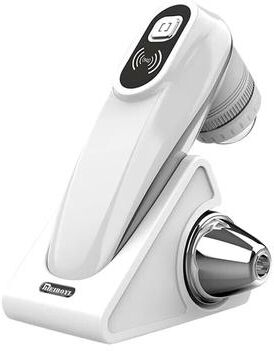
StayWell Professional Skin Analyzer Rechargeable UV Testing Analysis Magnifier With Dual Probes & Wi Fi App Control Professional Skin Analyzer Rechargeable UV Testing Analysis Magnifier With Dual Probes & Wi Fi App ControlExperience nextlevel skincare diagnostics with our Professional Skin Analyzer Rechargeable UV Testing Analysis Magnifier. Designed for beauty professionals and techsavvy enthusiasts alike, this smart device uses optical amplification to reveal...155,97 $*Shipping: 0,00 $Secure redirect to the provider
-
Uplift Picks 3D Skin Analysis Machine Portable Facial Scanner For Moisture Oil And Texture Testing white (21.5 Inch)See your skin more clearly and make every skincare choice feel more intentional. This 3D skin analysis machine helps check moisture, oil balance, and texture so you can better understand what your skin needs. Designed for home routines, salons,...4620,00 $*Shipping: 0,00 $Secure redirect to the provider
-
What does 'Er ist gekommen' mean?
'Er ist gekommen' is a German phrase that translates to 'He has come' in English. It is used to indicate that a male person has arrived at a certain location or event. The phrase is in the past tense and implies that the action of coming has already been completed. **
-
Is it correct to say 'Ich bin auf die Welt gekommen' or 'Ich bin in die Welt gekommen'?
Both phrases are correct, but they have slightly different meanings. "Ich bin auf die Welt gekommen" translates to "I came into the world" and emphasizes the idea of being born or arriving on Earth. On the other hand, "Ich bin in die Welt gekommen" translates to "I came into the world" and can be interpreted as entering or becoming part of the world. Both phrases are grammatically correct and can be used depending on the context you want to convey. **
-
Is it correct to say "Ich bin auf die Welt gekommen" or "Ich bin in die Welt gekommen"?
Both phrases are correct, but they have slightly different meanings. "Ich bin auf die Welt gekommen" emphasizes the idea of being born into the world, while "Ich bin in die Welt gekommen" can also mean arriving or coming into the world. The choice between the two phrases depends on the specific context and the nuance you want to convey. **
-
What is grammatically correct: Ich würde kommen or Ich wäre gekommen?
Both "Ich würde kommen" and "Ich wäre gekommen" are grammatically correct, but they have different meanings. "Ich würde kommen" means "I would come" and is used to express a conditional or future action. On the other hand, "Ich wäre gekommen" means "I would have come" and is used to express a hypothetical or past action that did not happen. **
Similar search terms for Gekommen
-
Scholastic Next Step Guided Reading Assessment, K-2Developed by leading literacy experts Jan Richardson, Ph.D., and Maria Walther, Ed.D., Next Step Guided Reading Assessment uses Richardson's proven Assess-Decide-Guide teaching system to pinpoint students' reading level and target instructional next...489,00 $*Shipping: 0,00 $Secure redirect to the provider
-
AMiO 04733 Self-diagnosis equipmentSupplementary Article / Supplementary Info Info 2: with OBD connector; Supplementary Info: OBD II; Operating system: Android, iOS, Windows; Certificate: ISO 9141-2, ISO 14230-4, ISO 15765-4 CAN , ISO 15765-4 CAN; Colour: black/red6,29 £*Shipping: 8,45 £Secure redirect to the provider
-
SEALEY VS8812 Self-diagnosis equipmentConnector type: EOBD ; Parameter: Live Data; Housing Colour: red; Supplementary Article / Supplementary Info Info 2: with OBD cable; Length [mm]: 124; Width [mm]: 72; Height: 18; Gauge: with TFT display; Operating temperature from [°C]: 0; Operating temperature to [°C]: +60; Test standard: SAE; Certificate: SAE J1979 2007; Construction Year from: 2001 Petrol, 2004 Diesel87,49 £*Shipping: 8,45 £Secure redirect to the provider
-
WEBASTO 1320920A Self-diagnosis equipmentOperating System: Windows; Manufacturer Restriction: AirTop 2000/S/ST/STC, Air Top 3500/5500/ST, AirTop EVO 3900/5500, Air Top Evo 40/55, HL 90, Thermo Top, Thermo Top C/E/P/Z, Thermo Top Evo, Thermo Top 50 Eco, Thermo 90/S/ST/Pro, Thermo Top Pro , 120/150, Thermo, S230/S300/S350/S400, Thermo Plus , 230/300/350, GBW 300662,99 £*Shipping: 1,99 £Secure redirect to the provider
-
What is grammatically correct: "Ich würde kommen" or "Ich wäre gekommen"?
Both "Ich würde kommen" and "Ich wäre gekommen" are grammatically correct, but they have different meanings. "Ich würde kommen" means "I would come" and is used to express a conditional future action. On the other hand, "Ich wäre gekommen" means "I would have come" and is used to express a hypothetical past action that did not happen. **
-
What does it mean when someone says "Du bist mir zuvor gekommen"?
When someone says "Du bist mir zuvor gekommen" in German, it means "You beat me to it" or "You got there before me." It is used to express that someone has done something before you had the chance to do it. This phrase can be used in a variety of contexts, such as in a race, in completing a task, or in making a decision. **
-
To Christians here: In your opinion, what does the phrase "ins Fleisch gekommen" in 2 John 17 mean?
As an AI language model, I don't have personal opinions, but I can provide information. The phrase "ins Fleisch gekommen" in 2 John 17 is a German translation of the original Greek text, which is "ἐν σαρκὶ ἐληλυθότα." This phrase is often interpreted to mean "come in the flesh" and is used in reference to the incarnation of Jesus Christ. It signifies the belief that Jesus, the Son of God, came to earth in human form, emphasizing the physical manifestation of God's presence among humanity. **
-
Can one say "Ich bin vor einem Jahr nach Deutschland gekommen" or does only "vor" go in this sentence?
Both "Ich bin vor einem Jahr nach Deutschland gekommen" and "Ich bin vor einem Jahr nach Deutschland gekommen" are correct. In this context, "vor" and "nach" are both used to indicate the time frame of the action. "Vor" indicates that the action of coming to Germany happened a year ago, while "nach" indicates the destination of the action. Therefore, both prepositions are necessary in this sentence to convey the complete meaning. **
* All prices are inclusive of VAT and, if applicable, plus shipping costs. The offer information is based on the details provided by the respective shop and is updated through automated processes. Real-time updates do not occur, so deviations can occur in individual cases. ** Note: Parts of this content were created by AI.